Experts Advocate for Climate-Sensitive Peacebuilding Initiatives in Benue State
 Tamenor Kwaghzer
Nov 1, 2025 10:32
269
0
Tamenor Kwaghzer
Nov 1, 2025 10:32
269
0
By Godwin Edeh
Climate security experts have advocated for the adoption of climate-smart eco-system to achieve peace and security in Benue state.
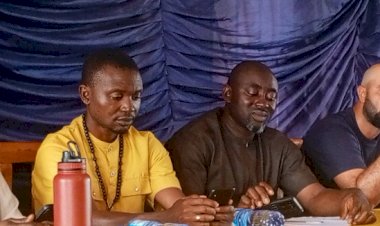
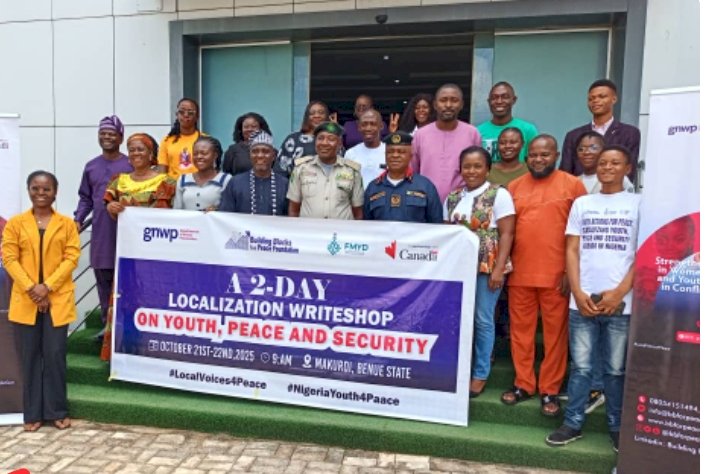
This was made known during the two-day 23rd-24th October 2025 workshop organized by the Building Blocks for Peace Foundation (BBFORPEACE) in Makurdi, to sensitise Benue youth on the need to adopt a climate-smart peacebuilding eco-system.
The lead discussant, Executive Director, Global Initiative For Food Security and Ecosystem Preservation ( GIFSEP) and expert on climate change, peace and security, Dr Michael David stated that, the industrial revolution marked the beginning of climate change with the new industries contributing 75% to climate pollutions not just in Europe but globally.
The climate change expert revealed that, the current insecurity in Benue state is due to the negative impacts of climate change in the Sahel regions leading to both human and cattle migration by herders to feed their cattles, taking advantage of the favourable climatic environment of Benue state and middle Belt as some of the natural causes of conflicts and insecurity.
Dr David however enumerated physical stressors of climate change to includes flood due to harmful environmental practices, chemical stressors such as pesticides and herbicides and biological stressors includes overpopulation and pathogens while poverty and urbanization as economic stressors.
According to him, "These stressors contribute to several risk factors such as dry spell, flood, food insecurity and poverty, and their attendant increase in conflicts and migration with many people rendered homeless, becoming Internally Displaced Persons (IDPs)".
Dr David urged participants to be climate change agents in their respective communities by adopting smart and resilient climate systems that will guarantee peace, security, a clean, healthy environment, and improve the level of agricultural activities through collaborations with community leaders, youth engagement and multi- agency collaborations.
While delivering his paper on "Climate change Linkage to Conflict in Benue state", Dr Terwase Shabu of the Geography Department, Benue State University, described the situation as alarming but equally surmountable. He attributed the current high level of insecurity and conflicts in the state to frequent flooding, rising temperatures, dry spell variability, and migration impacting on agricultural activities as a result of climate change, thus, becoming a serious threat to the state, as well as the nation's food security.
Dr Shabu further added that, climate-conflict nexus in Benue state is as a result of scarcity of resources, poverty, inequality, political instability and lack of human security which are natural and human hazards that provides vulnerable conditions for conflicts and disaster in our communities. He cited the example of Agan forest which is no longer in existence due to the activities of IDPs who need firewood, leading to desertification of the area.
According to him, verifiable data indicates that, Guma local government area has the highest numbers of IDP camps, followed by Makurdi, Agatu, kwande, Logo and now Otukpo which he attributed to farmer-herder conflicts, subsequent displacement, loss of livelihood and humanitarian crises.
He claimed that, "the migration of herders into Benue State is due to desertification of the Sahel regions which negatively impacted on cattle grazing in the north forcing them to migrate to Benue State for pastures, affecting the farmlands and agricultural activities, and leading to serious implications on peace building and climate actions".
Dr Shabu called on participants to adopt climate risk management and to promote climate smart agriculture, inter- agencies collaborations for sustainable peace through climate resilient development. He added, “You can't solve climate change problems without engaging the various stakeholders". He recommended the establishment of the state climate and peace desk, frequent media engagement, farmers-herders interface, and a state climate change policy which will translate into peace and security where farmers can return to their farming activities without fear of attack.
In her session, Dr Elizabeth Jeiyol of the Department of Geography, Benue State University and Executive Director, Gender and Environmental Risk Reduction Initiative (GERI), discussed the gender dimensions of climate change on women in Benue State, stating that women are the most affected by climate change globally especially in Africa and particularly in Benue State due to cultural norms.
She revealed that, women contribute 90% to the domestic needs of families as well as that of our communities and the most affected during conflicts as they are always at the forefront of every crisis as currently witness in the state. In her words "It is the women that go to the farms, break the firewood, take care of children as well as perform her conjugal responsibilities. Women therefore, require social - economic empowerment to overcome the climate change conflicts.
Rafiu Lawal and the Programme Officer, Mr Samson Shabu welcomed participants to the workshop and urged them to take advantage of the two days brain storming engagement to acquire knowledge that will build peace and security in their communities and by adopting in agricultural innovations that are resistant to climate change.
Other notable participants during the workshop include, Assistant Commandant of Corps, Peter Akpam, Mr Orinya Ogenyi, Benue State Budget and Economic Planning Commission, Abraham Shie, Blessings Adzaagee, Paul Idyu, Paul Akinda were among other participants.