NGO Encourages FSWs In Benue on Need for Collective Action to Prevent GBV
 Tamenor Kwaghzer
Jul 18, 2025 07:53
259
0
Tamenor Kwaghzer
Jul 18, 2025 07:53
259
0
NGO Encourages FSWs in Benue on Need for Collective Action to Prevent GBV
By Aloysius Nguul Makurdi
The Concerned Women International Development Initiative (CWIDI) has reaffirmed its commitment to promoting gender equality and protecting the rights of vulnerable women and girls in Benue State.
At the forefront of its work is a bold project aimed at improving the social and economic well-being of female sex workers (FSWs) by reducing violence, enhancing access to inclusive services, and empowering them with legal knowledge, vocational skills, and advocacy platforms.
The project, supported through the French Embassy Fund for Civil Society Organisations (FEF-OSC), focuses on empowering marginalized women through a multi-pronged approach: economic and social empowerment, increased health accessibility, and improved access to justice for women, girls, and vulnerable groups.
CWIDI, a women-led civil society organization, has spent the past several years working with marginalized populations—particularly adolescent girls and young women (AGYW), female sex workers, survivors of gender-based violence, women with disabilities, and rural or displaced women.
The organization has implemented interventions that address sexual and reproductive health and rights (SRHR), gender-based violence (GBV), and women’s participation in governance.
Other achievements of CWIDI include: Supporting over 500 adolescent girls and young women to access SRHR information and services through peer education and health outreach,strengthened the capacity of community leaders and law enforcement officers, many of whom now serve as GBV response champions and human rights advocates within their communities,increased political and community-level support for Sexual Assault Referral Centres (SARCs), leading to stronger advocacy for improved funding and sustainability in Benue State as well as
enhancing legal literacy among survivors of violence, leading to an increase in GBV case reporting and referrals.
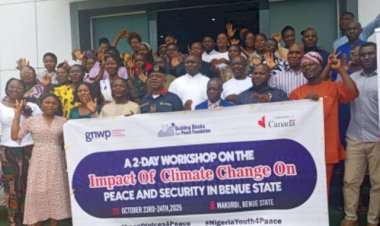
Building on this foundation, CWIDI organized a capacity-building workshop in Gboko to empower FSWs with advocacy and legal tools, and to encourage them to form associations to strengthen their collective voice.
Making a presentation during the two-day capacity building, Director of Programmes and Strategy at CWIDI, Bridget Okeke, revealed that the organisation is working to strengthen partnerships with the police, the National Human Rights Commission, and other institutions to promote the protection of female sex workers.
She explained that forming associations would give FSWs a stronger platform to engage constructively with authorities and demand improved access to services and protection.
“We encourage participants to organize, elect leaders, and pursue peaceful, rights-based solutions to injustice,” she added.
Barrister Awashima Adingi, who facilitated legal literacy sessions at the workshop, noted that around 30% of Nigerian women aged 15–49 have experienced physical violence, while emotional, sexual, and economic abuse rates are even higher.
She urged participants to use their newfound legal knowledge to report abuse through appropriate institutions.
Participants at the workshop shared difficult personal experiences, including exploitation, stigma, and economic hardship, but expressed a strong resolve to begin forming support associations in their communities.
One participant said, “I now understand my rights and how to speak up. We will begin forming our associations to support each other and speak with one voice.”
Looking ahead, CWIDI plans to support peer-led training, intensify advocacy visits to justice and health institutions, and monitor the impact of these associations on service access and community safety.
Through the FEF-OSC-supported project, Okeke disclosed CWIDI intends to continue to advance gender equality, reduce violence, and promote the socio-economic integration of women and girls in Benue State.
Participants during the session commended CWIDI for the workshop, describing it as timely and life-changing.